For many years, Geographic Information Systems have helped us understand the world better. We’ve mapped cities, analysed patterns, optimised routes, and visualised risk.
But something fundamental is changing.
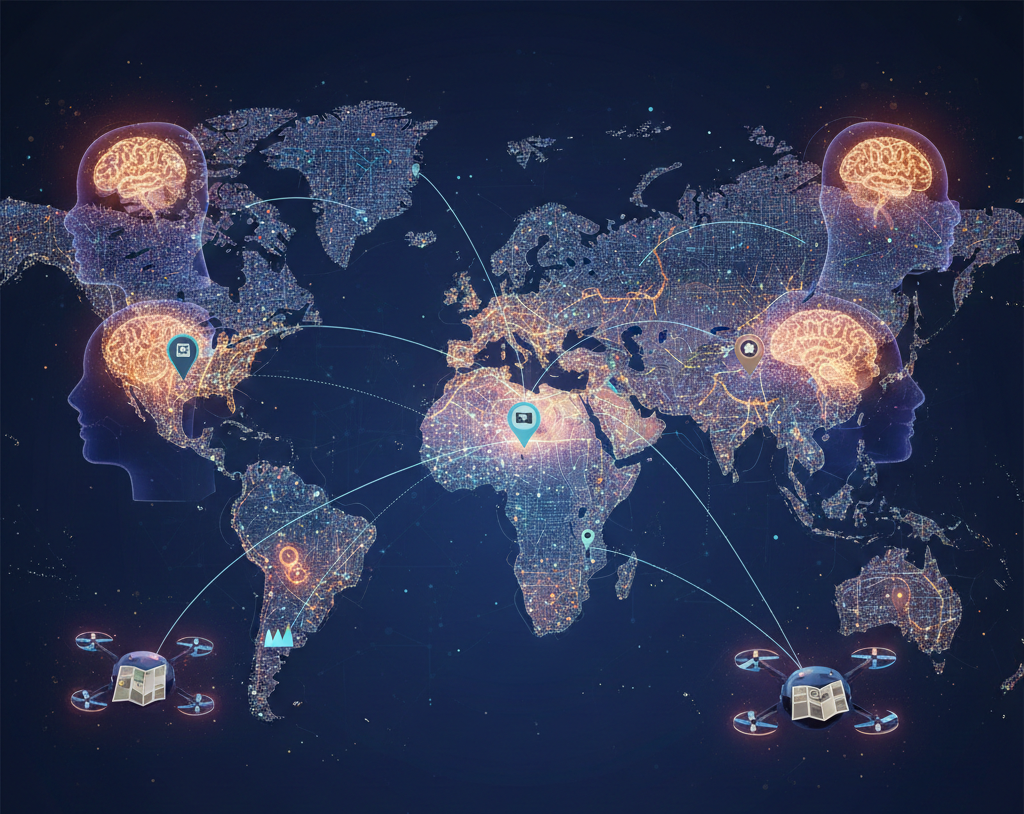
GIS is no longer just about showing information on a map. It is increasingly about reasoning with spatial information.
This marks the beginning of what can be called the agentic era of GIS, where geospatial systems move beyond automation and become intelligent decision-support tools.
THE LIMITS OF TRADITIONAL GIS AUTOMATION
Most modern GIS workflows rely on automation. Scripts follow predefined steps, models are built on fixed assumptions, and pipelines expect stable data.
Automation has served the profession well. But it is rigid by nature.
Urban development, infrastructure planning, emergency response, and environmental risk all involve uncertainty. Data changes, assumptions break, and context matters.
WHAT DOES “AGENTIC” MEAN IN GIS?
An agentic system is defined by behaviour, not tools.
An agent understands a goal, considers context, selects appropriate actions, evaluates outcomes, adapts to change, and explains its reasoning.
In GIS, this means systems that interpret spatial questions, identify relevant datasets, choose suitable analyses, and communicate results clearly.
DECISION SUPPORT, NOT DECISION MAKING
Agentic GIS systems do not make decisions.
They surface insights, highlight risks, suggest scenarios, and explain trade-offs. Humans remain responsible.
WHERE MODERN AI FITS
Language models help interpret intent and explain results. But without spatial validation and system design, they remain assistants.
Agentic GeoAI combines AI with strong GIS fundamentals.
CLOSING
The future of GIS will be more thoughtful, not louder.
Built by people who understand space and systems.
About PixelGEO
PixelGEO explores geospatial intelligence through thoughtful system design, practical projects, and responsible use of modern tools.